Balcony Waterproofing Sunshine Coast QLD
Balconies on the Sunshine Coast are exposed to moisture, rain, sunlight and coastal conditions. Effective waterproofing helps prevent water from entering the balcony structure and surrounding areas, particularly where surfaces, joints or drainage points have deteriorated.
Balcony Waterproofing on the Sunshine Coast
Balcony waterproofing needs to suit the construction of the balcony and the condition of the existing surface. Cracks, damaged finishes, water staining, ponding or deterioration can indicate that moisture is getting where it should not.
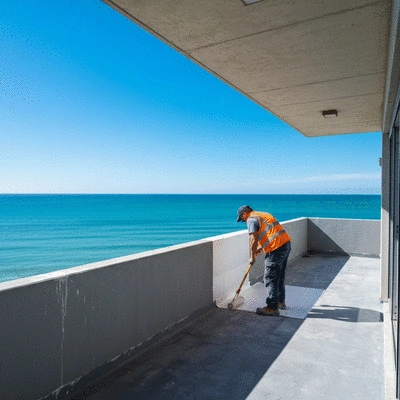
How Coastal Conditions Can Affect Balconies
Balconies in coastal areas are regularly exposed to changing weather conditions. Moisture, salt exposure and strong sunlight can contribute to the deterioration of some building materials and surface finishes over time.
Areas that may require particular attention include:
- Balcony floors and exposed surfaces
- Junctions between floors and walls
- Cracks and deteriorated joints
- Drainage points and outlets
- Areas around penetrations and fixtures
- Existing waterproofing membranes
Waterproofing is only one part of balcony performance. Adequate drainage and correctly prepared surfaces are also important when dealing with water exposure.
Signs Your Balcony May Have a Waterproofing Problem
Some common warning signs can include:
- Water staining or discolouration
- Peeling or deteriorating surface finishes
- Cracks in the surface or surrounding areas
- Persistent dampness
- Water appearing beneath or beside the balcony
- Standing water after rainfall
These signs do not necessarily confirm a waterproofing failure, as water can originate from drainage, joints, plumbing or other parts of the building. An assessment can help identify the likely source.
For more information about warning signs and waterproofing problems, see our guide to urgent signs for waterproofing repairs.
Balcony Waterproofing Methods
The appropriate waterproofing system depends on the balcony construction, substrate, existing condition and intended finish. Systems can include:
- Liquid-applied membranes: Applied to prepared surfaces to create a continuous waterproofing layer.
- Sheet membranes: Pre-formed membrane systems used where suitable for the substrate and project.
- Waterproof coatings: Coatings that can provide additional protection where appropriate for the surface.
Correct preparation is important before any membrane or coating is applied. Existing damaged materials may need to be repaired or removed, and areas such as corners, joints, penetrations and drainage points require careful detailing.
Balcony Waterproofing and Drainage
Water needs a suitable path away from the balcony surface. Ponding or slow drainage can place additional moisture exposure on waterproofed areas and may indicate a drainage or surface-fall issue.
When investigating balcony water problems, it is therefore important to consider both the waterproofing system and how water is being directed away from the area.
Balcony Waterproofing for Existing Properties
When an existing balcony develops leaks, the first step is determining the extent and source of the problem. Applying a new coating over a deteriorated or unsuitable surface may not address an underlying waterproofing failure.
The condition of the substrate, existing membrane, surface finishes and drainage should be considered before selecting a repair approach.
Our guide to common waterproofing mistakes provides further information about problems that can affect waterproofing work.
Frequently Asked Questions About Balcony Waterproofing
- Q: Why does a balcony need waterproofing?
- A: Waterproofing helps prevent water from penetrating the balcony structure and surrounding areas. It is particularly important where the balcony is exposed to regular rainfall and moisture.
- Q: What are the signs of a balcony waterproofing problem?
- A: Water staining, dampness, deteriorating finishes, cracks, ponding and water appearing below or beside the balcony can indicate that further investigation is required.
- Q: What waterproofing systems can be used on balconies?
- A: Depending on the construction and condition of the balcony, options can include liquid-applied membranes, sheet membranes and suitable waterproof coatings.
- Q: Does balcony drainage affect waterproofing?
- A: Yes. Waterproofing and drainage work together to manage water. Persistent ponding or poor drainage should be investigated when assessing balcony water problems.
- Q: Can an existing balcony be waterproofed?
- A: Existing balconies can often be assessed for waterproofing repairs or replacement. The appropriate approach depends on the condition of the existing surface and waterproofing system.
Balcony Waterproofing on the Sunshine Coast
Balcony waterproofing should be considered as part of the overall management of water on the balcony. Identifying problems early and assessing the waterproofing, surface condition and drainage can help determine the appropriate solution.
Contact us on 0419 136 537.